Key Takeaways
- Why the pressure to respond instantly to texts feels more pressured than it used to
- How read receipts and typing indicators changed the social rules of communication
- What calling cards and landline phones can teach us about sustainable connection
- The neuroscience of why an unanswered message can feel like rejection
- Three research-backed practices for protecting your attention span in an always-on world
A client shared something with me that I imagine sounds familiar to a lot of us: while she was juggling several demanding projects at work and trying to keep up with her obligations at home, the number of unread texts on her phone kept climbing. It got to the point that just seeing that notification number gave her a dropping sensation in her stomach.
It’s not that the texts were being completely ignored – she’d already read and replied to a handful of the easiest ones. But most of them hadn’t been touched, and there they sat, waiting. The dread of all those messages was distracting, but no good solution seemed to exist. It wasn’t realistic to interrupt her work each time a text arrived, and yet the guilt of leaving so many people hanging was even more stressful. She’d convinced herself that people she cared about had to be getting the message (via her silence) that they didn’t matter to her.
What she wished she could do was give each person a caring, thoughtful reply. What actually happened was a correspondence logjam: the easy ones got answered quickly, the ones requiring more thought kept getting deferred for the “right time” that kept not happening, and the trickier ones (like needing to tell someone something they wouldn’t want to hear) paralyzed her. Meanwhile new notifications kept coming.
The Calling Card and the Art of the Managed Door
I’m a big fan of old novels, and something I remembered from them kept coming to mind during my conversation with that client. Let me take us back to the late 19th century:
In the Victorian era, social visits were governed by an elegant little “device”: the calling card. When a visitor arrived at someone’s home, they didn’t just expect to be received. They handed an engraved card to a servant, who placed it on a silver tray in the entrance hall. The lady of the house could then decide whether she was at home to that particular visitor that day. If she wasn’t, the servant would simply convey that she was “not at home,” which everyone understood as a polite social formula rather than a literal statement.
The whole system ran on shared expectations. Calls were paid during a specific window, generally between two and four in the afternoon in winter, two and five in summer, and a proper visit lasted between ten and twenty minutes. Calling before noon was considered seriously rude, because mornings belonged to the family. Outside of visiting hours, the inner door simply stayed closed, and that wasn’t a barrier so much as a boundary.
The cards themselves carried information that made the system even more gracefully effective. A lady might write her seasonal visiting hours directly on her card, or note that tea would be served at a particular time. A folded corner conveyed coded messages: one for condolence, another for congratulations. The card did some of the social work for you, before anyone even spoke.
(This system belonged largely to middle and upper-class households since it relied on servants. But the underlying idea, that managed availability is a form of grace rather than rejection, is something all of us can borrow from.)
The calling card wasn’t about being unfriendly or isolated; it was a social technology for managing relationships and protecting someone’s time and energy. It created a buffer, a small, gracious space between the outside world and the inner life of the household.
Somewhere along the way, we replaced that managed door with one that never closes. We moved from scheduled hospitality (I am available to you during these hours, with my full presence and attention) to on-demand accessibility (I am available whenever you need me, at any hour, on any device). And that difference is exhausting our nervous systems (more on that in a moment).
The Lessons of the Landline
That same principle, that unreachability could be ordinary rather than offensive, didn’t disappear with horse-drawn carriages. It carried right through into the era many of us actually grew up in: the age of the landline telephone.
For those of us who remember life before answering machines (I do!), it’s worth revisiting how that earlier form of communication worked, not to return to the past, but because the structure of it offered something we’ve largely lost: unreachability was normal and accepted, not an act of social withdrawal or implied rejection.
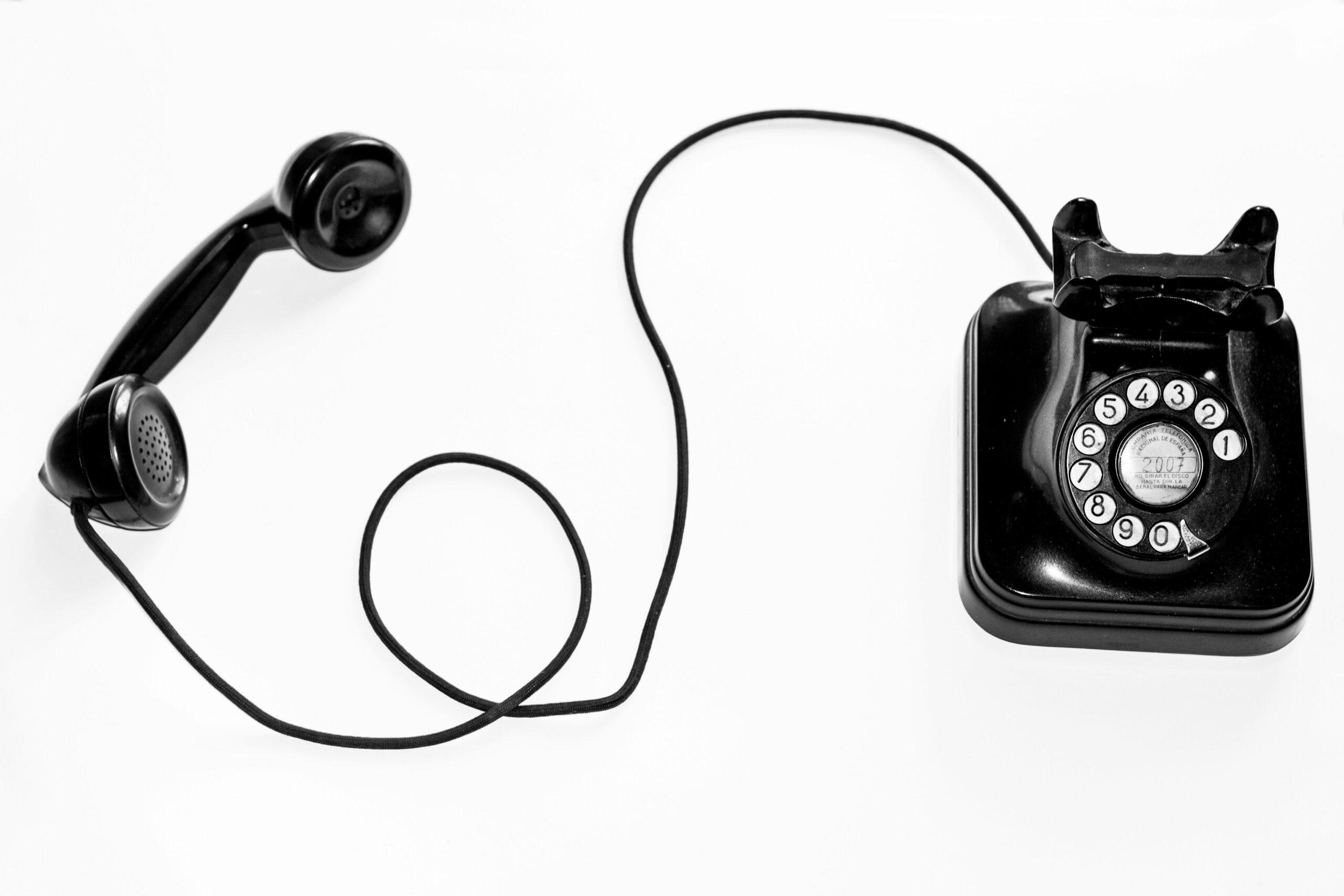
The telephone, in its original form, was connected to the wall. If you weren’t nearby, you were simply unavailable, not dismissive or uncaring, just not able to take the call. Your location determined your accessibility, not your willingness to connect. There was also a general understanding around set-aside times when people wouldn’t be expected to take calls even if they were home: not during dinner, and not early in the morning or late at night. Breaking that protocol was reserved for true emergencies. If you called a friend and the phone rang into an empty house, it simply meant they weren’t available right now. You’d try again later.
As researchers have noted, we have moved into an era where phone numbers refer to people instead of places (Campbell & Park, 2008). That’s a profound difference. When a phone number belonged to a place, your absence was self-explanatory. When a phone number belongs to a person, every unanswered call becomes a potential statement about the relationship.
That shared understanding (that unreachability was the default state, not an act of social aggression) seems almost quaint now. But it wasn’t quaint. It was a nervous system doing what nervous systems need to do: resting.
MIT sociologist Sherry Turkle has spent more than two decades studying what happened when always-on mobile technology replaced this earlier rhythm. In Reclaiming Conversation, she observed that many of us have lost our tolerance for solitude, the very thing that allows us to recover, reflect, and meet others with our full selves (Turkle, 2015). Constant digital availability connects to feelings of real-world isolation, anxiety, and mental exhaustion (Turkle, 2011). The landline era didn’t have superior values; it just happened to have built-in pauses that protected something we now have to protect on purpose.
How the Door Got Propped Open
It’s interesting to know that none of this was planned. Nobody sat down and chose that texts would become a continuous, instant form of communication with a built-in obligation to reply right away. The expectation evolved, and once you see how, it becomes a little easier to stop taking it personally.
Texting began as “short message service” in 1994 and became commonplace in the early 2000s. As it grew into most people’s primary way of staying in touch, the social rules of face-to-face conversation got imported into a medium that doesn’t actually work the same way. Researchers studying texting norms found that users developed an “expectation of reciprocation,” meaning that messages began to be treated like turn-taking in spoken dialogue, where leaving the other person hanging felt like a breach (Laursen, 2005).
The technology then accelerated this in ways the original SMS engineers never imagined. Read receipts. Typing indicators. Online status icons. Each new feature added another layer of visibility and another layer of social pressure. A 2022 study in the Proceedings of the National Academy of Sciences found that fast response times genuinely do signal social connection, but in face-to-face conversation, where a quick reply emerges from real attunement (Templeton et al., 2022). We took an evolved cue from one context (live, present-moment dialogue) and applied it to a medium that travels across very different attention states, time zones, and moments of someone’s day.
So when a text sits unanswered, the brain’s threat-detection system can read the silence as rejection, even though the actual reason might just be that the recipient is in a meeting, or driving, or making dinner, or genuinely needs more than three seconds to think about how they want to respond. The expectation isn’t unreasonable so much as it’s misapplied.
The Science of the Always-Open Door and the Nervous System
Here’s what’s happening biologically when we live without that buffer:
Research suggests that the expectation of an immediate response keeps us in a persistent state of high-alert brain activity, the neurological equivalent of your threat-detection system staying in standby mode, never quite getting the signal that it’s ok to power down. This is the opposite of the parasympathetic “rest and digest” state where genuine recovery, digestion, and deep sleep actually happen.
Every notification is a small interruption. According to attention researcher Dr. Gloria Mark at UC Irvine, it takes an average of 25 minutes to return to focused, deep work after a single interruption (Mark, 2023). We’re not just feeling scattered; we’re biologically unsuited for a life without some version of that silver tray in the foyer.
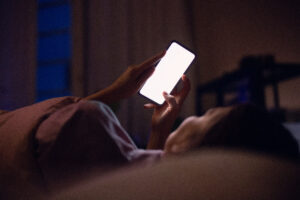
This matters for more than just productivity. Studies on what researchers call “telepressure” (the perceived pressure to respond to messages immediately) link it consistently to sleep disruption, burnout, and elevated cortisol (Barber & Santuzzi, 2015). The phone on the nightstand isn’t neutral; it’s a door that’s always held partway open.
Hospitality vs. Accessibility
There’s a distinction I find myself returning to again and again in my work, and it’s the difference between hospitality and accessibility, how we welcome others and how we protect our restoration and privacy.
Hospitality is an intentional act. It means opening your space to another person with your full presence; prepared, willing, genuinely there. It requires something of you, and it offers something genuine in return. Joan Chittister wrote that “hospitality means we take people into the space that is our lives and our minds and our hearts and our work and our efforts. Hospitality is the way we come out of ourselves” (Chittister, 1990). We renew others in our connection to them, and find our own renewal in those connections too.
Accessibility without intentional limits means that we risk being available at moments that others (or our learned responsiveness to the technology itself) decide on our behalf. It’s impossible to offer the meaningful presence that true hospitality requires if we haven’t first tended our own selves.
Reclaiming the Visiting Hour: Three Practices Worth Trying
These aren’t rules so much as invitations; small adjustments that can make a meaningful difference to an overextended nervous system.
1. The Visiting Hour Choose a dedicated window each day (maybe two, if your life calls for it) when you give your full attention to messages and correspondence. Outside of those windows, the “tray” is unattended.
This practice, sometimes called communication batching, reduces what researchers call “manager’s fatigue,” the cognitive cost of constantly switching between deep work and social responsiveness. It lets your brain exit the high-alert state and stay in a productive flow for the rest of the day. The people in your life get a more thoughtful reply. You get your attention back.
2. The Corner Fold (A Little Context Goes a Long Way) Remember those Victorian cards with their folded corners, each one conveying a specific meaning? Our texts arrive stripped of all that context: no tone of voice, no facial expression, no indication of whether something is urgent or just a passing thought.
Try adding a small orienting phrase at the start of messages: “Just thinking of you” or “No rush on this” or “Whenever you have a moment.” Research shows our brains interpret an absence of social cues as a potential threat, filling the silence with the worst-case reading. A small “corner fold” of context prevents that. It’s a gift to the person receiving your message, and often gives them permission to reply in their own time too.
3. Leaving Your Device “Off the Hook” Use the tools already available to you (Focus modes, auto-replies, a simple out-of-office after a certain hour) to signal that you’re not available to come to the phone. This isn’t antisocial. It’s the digital equivalent of lifting the receiver from the cradle.
Research on recovery from work stress consistently finds that genuine rest requires psychological detachment, a real break from the signals and demands of availability, not just a physical one (Sonnentag & Fritz, 2015). The notification that doesn’t arrive is the one that can’t interrupt your sleep.
A Closing Thought
My client didn’t need to respond to every message the moment it arrived – what she needed was permission to be a person who has her own version of a foyer with a silver tray.
The point isn’t to forgo texting, but to recalibrate how our decisions about using it get made. Even though we can communicate instantaneously from any location at any time, that shouldn’t replace our sense of agency in interactions. You don’t have to keep your door open around the clock to be a kind, caring, connected person. The calling card existed precisely because thoughtful people understood that presence takes preparation, and that a graciously managed door is an act of respect, not rejection.
That silver tray can still be there for us, even if it’s metaphorical now. What would you like your “visiting hours” to look like?
References
Barber, L. K., & Santuzzi, A. M. (2015). Please respond ASAP: Workplace telepressure and employee recovery. Journal of Occupational Health Psychology, 20(2), 172-189.
Campbell, S. W., & Park, Y. J. (2008). Social implications of mobile telephony: The rise of personal communication society. Sociology Compass, 2(2), 371-387.
Chittister, J. (1990). Wisdom Distilled from the Daily: Living the Rule of Benedict Today. HarperOne.
Laursen, D. (2005). Please reply! The replying norm in adolescent SMS communication. In R. Harper, L. Palen, & A. Taylor (Eds.), The Inside Text: Social, Cultural and Design Perspectives on SMS (pp. 53-73). Springer.
Mark, G. (2023). Attention Span: A Groundbreaking Way to Restore Balance, Happiness and Productivity. Hanover Square Press.
Sonnentag, S., & Fritz, C. (2015). Recovery from job stress: The stressor-detachment model as an integrative framework. Journal of Organizational Behavior, 36(S1), S72-S103.
Templeton, E. M., Chang, L. J., Reynolds, E. A., Cone LeBeaumont, M. D., & Wheatley, T. (2022). Fast response times signal social connection in conversation. Proceedings of the National Academy of Sciences, 119(4), e2116915119.
Turkle, S. (2011). Alone Together: Why We Expect More from Technology and Less from Each Other. Basic Books.
Turkle, S. (2015). Reclaiming Conversation: The Power of Talk in a Digital Age. Penguin Press.